

Recently, Rand and I released the results of the State of Digital Agencies survey for 2025. Our goal of this annual survey is simple – get a temperate check on the digital agency world and give folks a benchmark for how they’re performing compared to their peers.
For this post, we’re publishing the results from all questions relating to the working environment of agencies and consultants.
We’ve seen some interesting shifts this year compared to 2024. In particular, it seems that full-time office based agencies are still declining, but teams are actually spending more time in the office overall. Teams appear to be choosing to spend more time in the office, with the average number of days shifting from two to three.
Let’s get into the data and take a closer look at the data.
Full-time office based agencies continue to decline, with hybrid working growing in popularity year on year
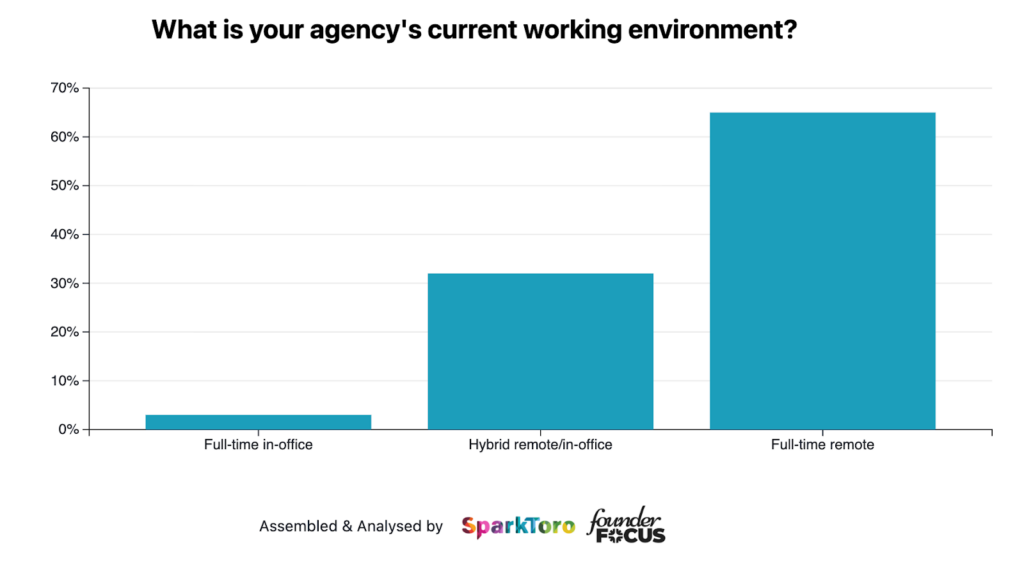
Just 3% of our respondents said that they are currently working in the office full-time. Most (65%) are full-time remote and the remainder (32%) are using a hybrid model.
If we compare to the same question that we asked in 2024, even fewer agencies are now full-time in the office. In 2024, 5% of agencies said they were full-time in the office.
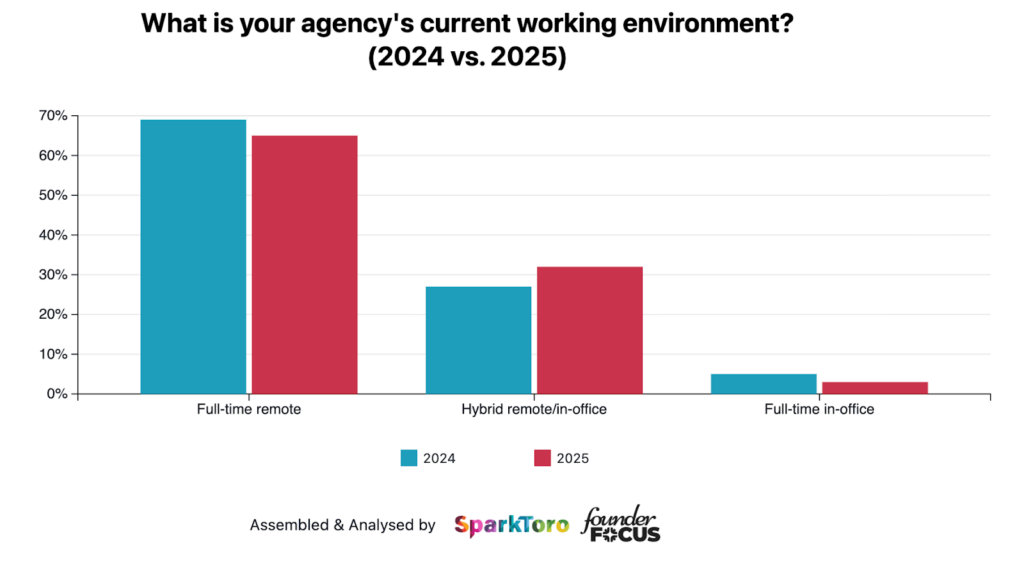
Interestingly, there was also a shift for some agencies who have appeared to move from full-time remote to hybrid working.
In 2024, 69% said that they were fully remote, compared to 65% this year.
The shift to hybrid is confirmed if we look at the fact that in 2024, 27% of agencies operated a hybrid model which has now increased to 32% in 2025.
Most agency staff can choose which days to work in the office, typically choosing to work 2-3 days a week there
With a large number of agencies reporting that they prefer a hybrid approach to working, we were keen to understand how flexible these models are. For most (61%) of agencies, their teams can choose which days of the week they work in the office.

Further to this, those staff who are allowed to choose which days to go into the office, tend to work between 2-3 days a week in the office.
This signals a change compared to 2024 where 54% of agencies said that their team could choose which days to come into the office – perhaps lining up with the trend we’ve seen where more agencies have moved to a hybrid model.
Teams are choosing to spend more time in the office compared to 2024
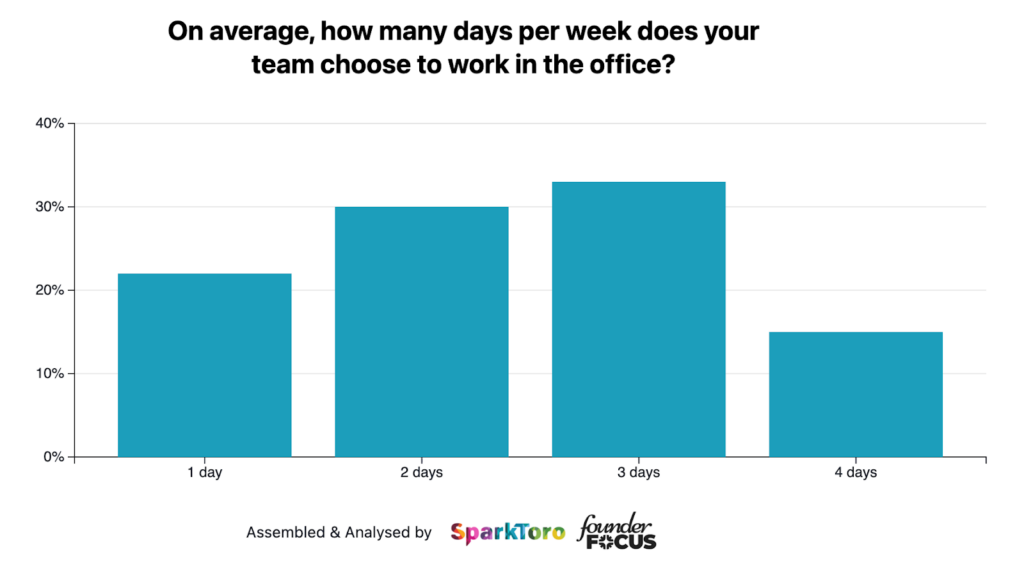
This signals a slight shift compared to 2024 where 2 days was the most popular answer, perhaps showing that team members are choosing to spend more time in the office.
In 2024, 33% of respondents said that their team typically chooses to spend 2 days a week in the office, with 30% choosing to spend 3 days in the office.

In 2025, these numbers have almost exactly reversed, with 33% of team members choosing to spend 3 days in the office and 30% spending two days in office.
Perhaps a bigger signal that team members are valuing face to face time with their colleagues?
For those agencies who said that their team has fixed in-office days, over half (60%) said that it’s compulsory for them to go in a minimum number of days per week or month.
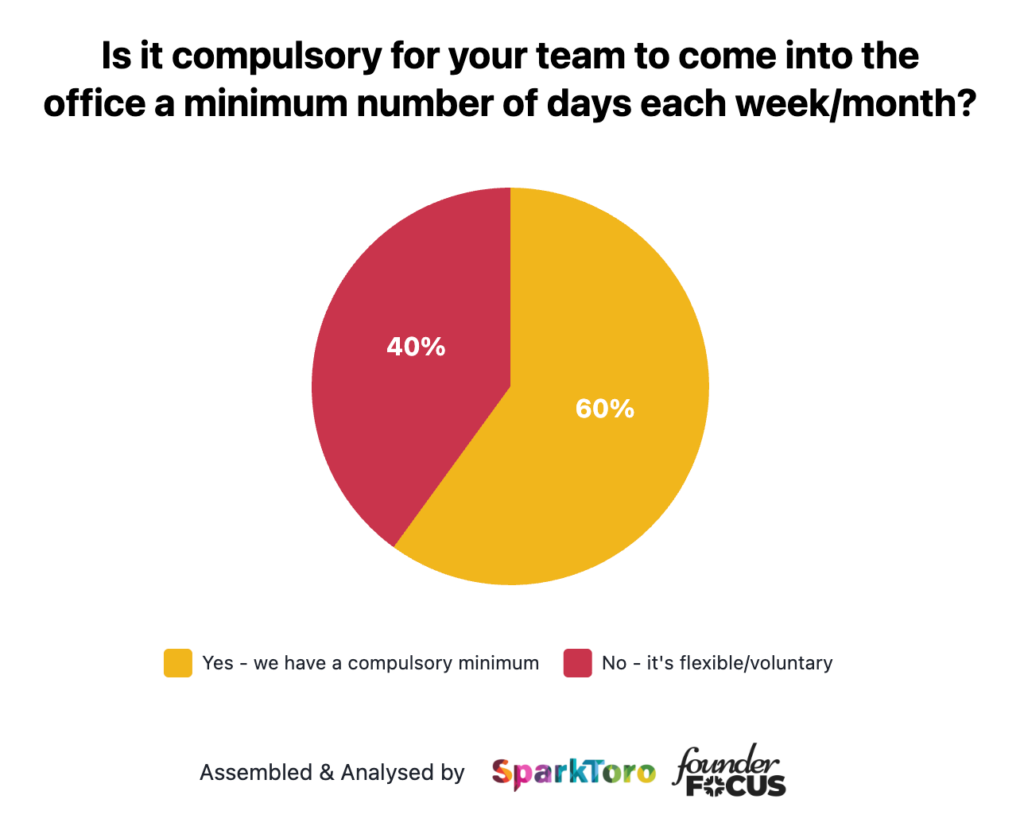
This is a marked increase to 2024 where we asked the same question and 53% of agencies said that they had a compulsory minimum requirement for their team to spend time in the office.
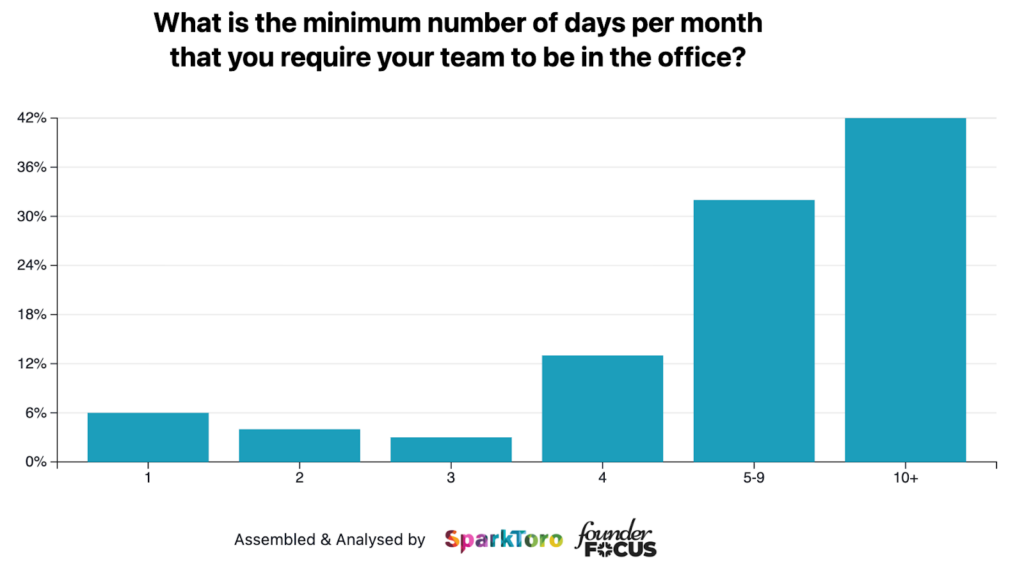
And for these 60%, most (42%) require that their teams are in the office for more than 10 days per month. This is a very slight increase from 2024 where 40% required their team to be in the office for more than 10 days per month.
Most agencies are happy with their current working environment policies and don’t expect to make changes
Now that a few years have passed since the pandemic, it appears that the vast majority (78%) of agencies have settled into their ways of working and are happy with their office / hybrid / remote set up.
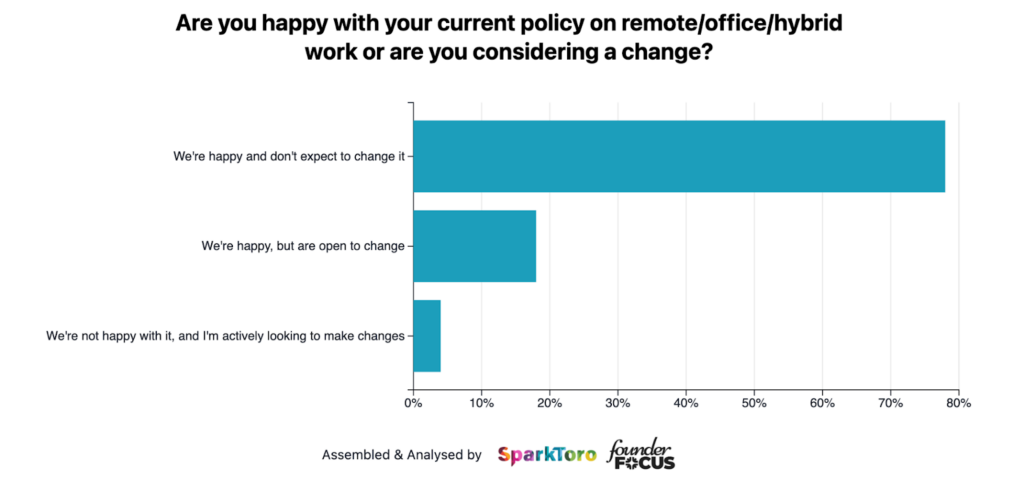
Only 4% said that they’re not happy with their current policy and are looking to change it. This is a slight increase compared with 2024 when just under 2% of agencies said that they were looking to change their policies on working environment.